
The Impacts of Language on Cognition and Metacognition
By Aiden Ahn
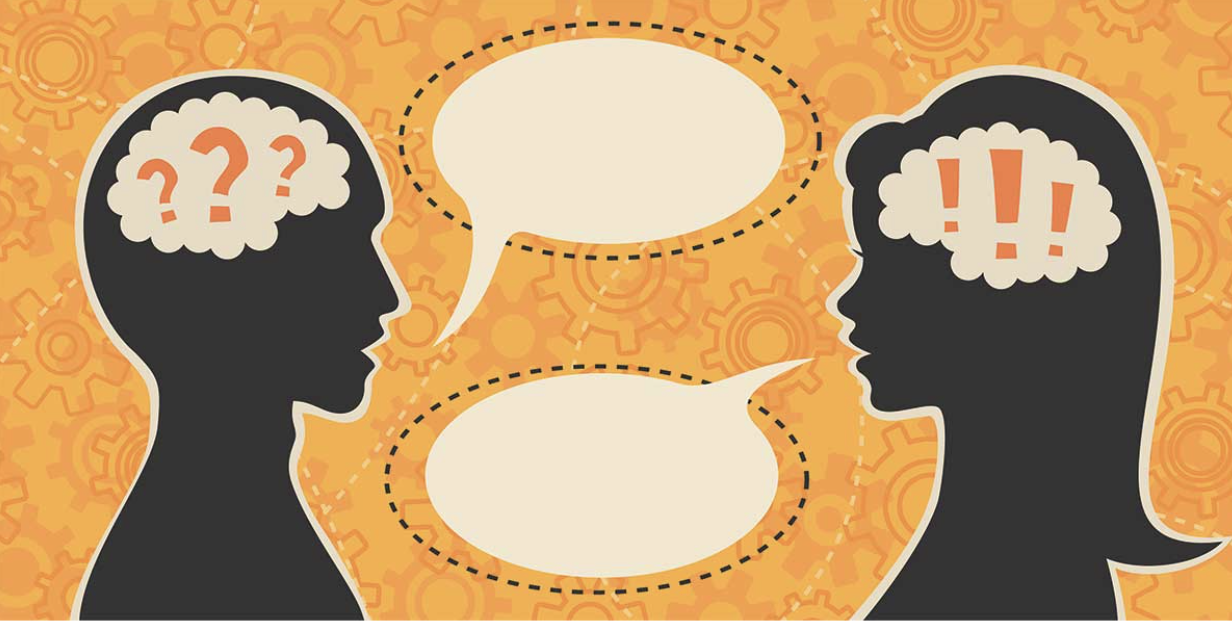
Photo courtesy of the University of York.
An introduction to the nature of language
Language, on the surface, may seem like an aspect that is just simply second nature. After all, it is a feature of life that all humans are inherently born with the ability to replicate and comprehend. However, within the immediate instincts to respond with “Doing well!” to a “How are you?” or “Thanks, you too!” to a “Have a good day!” lies a hidden truth: one’s own thought patterns. That’s right: your speech can be explained by sociological phenomena used to study human behavior as well.
But that realization hasn’t always been so obvious. Cognitive scientists have for years searched for a reason as to how language could tell what a person thinks or believes, even if it isn’t explicitly stated in their words. Today, their work has paid off due to their impacts on two key aspects of psychological studies: cognition and metacognition.
A brief history of cognitive linguistics

Noam Chomsky poses in his office at MIT. Photo courtesy of ABC News.
In order to understand how cognition and metacognition are affected by language, we must first learn about how these connections came to be. This was the thought process that Noam Chomsky, an American professor of linguistics at colleges like the University of Arizona and Massachusetts Institute of Technology, had about the way scholars viewed the structure of language. Contrary to the views of late 20th-century linguists, Chomsky believed that language was a system rooted in general cognitive abilities like categorization and reasoning rather than being a system that was detached from human understanding. Chomsky went against the grain of the era, which prioritized the idea of language being innately structured, rule-based, and centralized around theory, not practicality. Although initially doubted, Chomsky’s hypotheses began to see prominent usage as psychological studies, like Lenneberg’s Critical Period Hypothesis or Jean Berko Gleason’s “Wug Test,” began to produce similar results relating to how language was processed in the human mind.
So, how does language influence cognition?
A look into cognition shows us that it refers to the mental processes involved in acquiring knowledge and understanding through experience. The idea that language can influence cognition traces back to the Sapir-Whorf Hypothesis, also known as linguistic relativity, in which Edward Sapir and Benjamin Lee Whorf proposed that the structure and vocabulary of one’s language can shape how its speakers perceive and categorize their world.
For example, the variety of terms used for different shades of the same color in a language can play into an individual’s ability to process the distinctions between these nuances. The Russian language, in which there are different terms for the shades of light blue (“goluboy”) and dark blue (“siniy”), has speakers who are able to distinguish the shades more quickly than English speakers, which doesn’t make those differentiations.
Likewise, some languages’ use of cardinal directions, which consist of north, south, east, and west, in place of relative directions, which are up, down, right, and left, makes significant impacts on spatial reasoning. Kuuk Thaayorre, an indigenous Austronesian language, uses cardinal directions; surprisingly, speakers of this language were more efficiently able to navigate through unfamiliar territories and locations than speakers of languages that depended more on relative directions.
Does language’s effect on cognition play into metacognition?
If you’ve ever thought about thinking, that’s exactly what metacognition is: the processing of our own cognition. While this may seem complicated at first, there’s a very good example of metacognition that you partake in every day. Imagine yourself thinking about what you’re going to do in 20 minutes. What language are you thinking in? What’s the tone of the voice in your head? What words are you using to describe your plans? All of these elements represent metacognition. Without that language, voice, or vocabulary that you use to plan your thoughts, you wouldn’t have a medium to keep your brain active.
This has been seen to affect multilinguals, especially. Because bilinguals need to constantly and consciously switch between languages, they tend to have more mental self-monitoring and control. As a result, people who speak multiple languages tend to have improved executive function and even a delayed onset of dementia symptoms because they exercise their minds so frequently.
Conclusion
It’s crucial to understand that language isn’t simply a means of communication. In many ways, it’s an art form, mirroring the thoughts and expressions that we hold internally in our minds, waiting to be released to the outer world. Every word we choose and every sentence we form becomes a brushstroke on the canvas of human cognition. Not only that, but language and what it indicates about our thoughts set up our metacognition: our ability to reason and question what we think. Only by understanding these facets of our language capabilities can we fully grasp the impact that our speech, words, and writings have on ourselves subconsciously. And that aspect of language is what makes it so unique, interesting, and indicative of the beauty of human thought.
References
“Bilinguals’ Metacognition Is Affected by the Language Used as a Medium of Education.” Wiley | BERA Journals, John Wiley & Sons, 1 Aug. 2025, bera-journals.onlinelibrary.wiley.com/doi/abs/10.1002/rev3.70088.
Greenwood, John D. “Understanding the ‘Cognitive Revolution’ in Psychology.” ResearchGate, ResearchGate, Apr. 1999, www.researchgate.net/publication/229735544_Understanding_the_’Cognitive_Revolution’_in_Psychology.
“Historical Background.” Internation Cognitive Linguistics Association, Cognitive Lingustics ICLA, cognitivelinguistics.org/historical-background.
Johnson, Hannah. “Kuuk Thaayorre: An Endangered Language with the Right Direction.” Stowaway Magazine, Stowaway Magazine, 17 Nov. 2021, stowawaymag.byu.edu/blog/kuuk-thaayorre-an-endangered-language-moving-in-the-right-direction.
Marino, Caterina, and Judit Gervain. “The Impact of Generative Linguistics on Psychology: Language Acquisition, a Paradigm Example.” Hal Open Science, Hal Open Science, 31 Dec. 2020, shs.hal.science/halshs-03091551/document.
Rowland, Caroline. “Understanding Child Language Acquistion.” WordPress, Caroline Rowland, 2014, mohammedaljohani.wordpress.com/wp-content/uploads/2014/10/child-language-acquisition-2014.pdf.
Winawer, Jonathan, et al. “Russian Blues Reveal Effects of Language on Color Discrimination.” Proceedings of the National Academy of Sciences of the United States of America, National Academy of Sciences, 8 May 2007, www.pnas.org/doi/epdf/10.1073/pnas.0701644104.
