
Educational Censorship and Book Banning in the US
By Ashley Weng
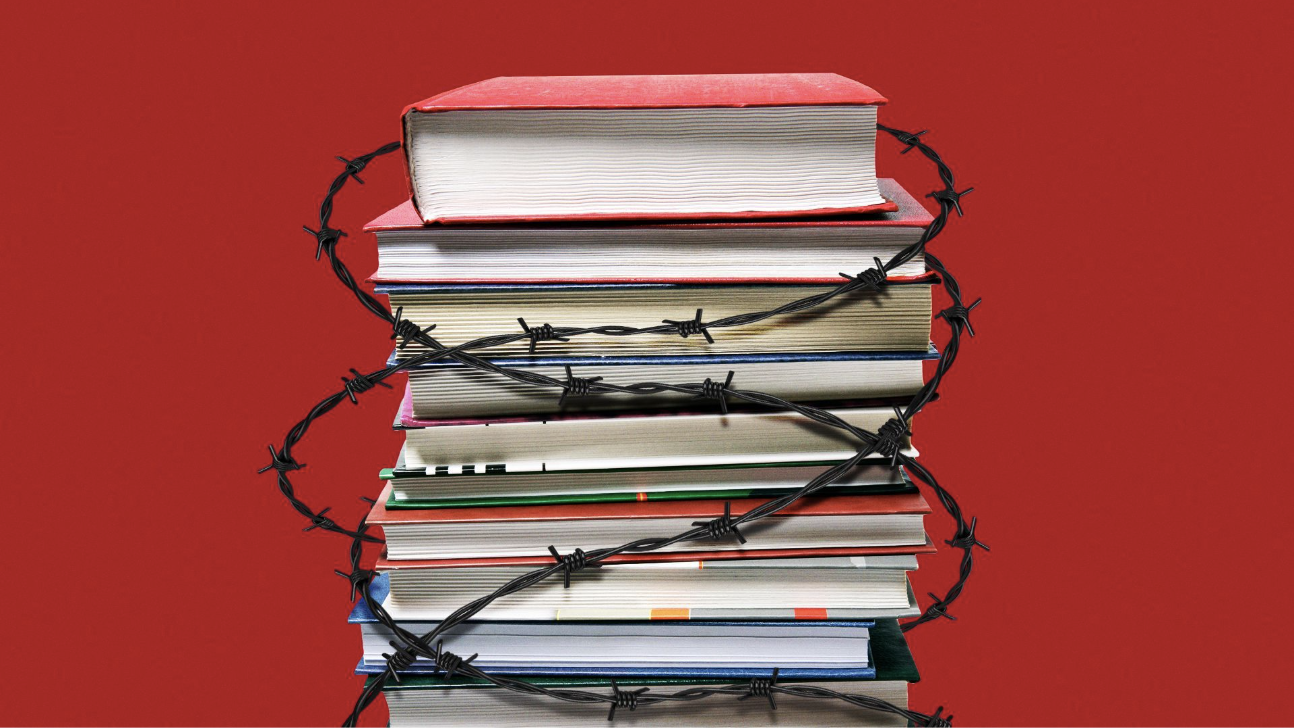
Image by Maura Losch/Axios
Throughout the United States, a powerful movement is transforming and controlling individuals' freedom to read. As they began to escalate in 2021, book bans have surged into the mainstream and have become a huge issue throughout the nation. Book bans are defined by PEN America as an act against a book based on its content, as a result of campaigns or administrative decisions. PEN America also notes that more than 10,000 book removals took place within the 2023-2024 school year alone. Calls for book censorship are also typically called for by minorities of conservative parents, who have small yet influential voices in school districts and public libraries. An example of an advocacy group that campaigns for the censorship of books is Moms for Liberty, which uses its ‘parental rights’ as an excuse to prevent their children from reading material that contains certain themes, such as those of racism and LGBTQ+ ideals. However, the majority argue for our First Amendment right to freedom of speech and declare that students should be able to have a diverse collection of books to read. Not only does book banning affect communities socially by silencing the voices of minorities, but it also affects the nation economically. While the debate over book bans continues to rise, this article provides an overview of the situation and the stakeholders affected by it.
Libraries
Public libraries find themselves in the center of this conflict, as they are one of the most important and trusted institutions in American life. Libraries are gathering spaces with free educational resources for students, where children can discover knowledge in reading without financial barriers. However, libraries are facing a significant issue due to the recent rise in book censorship. Libraries are being financially threatened as book ban campaigns are not fully satisfied, and they are running out of funds. An example of this issue is Samuels Public Library in Virginia, which became the target of book ban demands. Because these demands were not fully met, they lost significant county funding for simply refusing to remove titles that seemed ‘offensive.’ Not only does funding directly affect the economic well-being of libraries, but reviewing the books alone is costly as well. Samuels PL spent $50,000 in staff hours and administrative materials evaluating the books and making sure they had no material that could possibly be offensive. Looking at the bigger picture, Samuels PL is not alone. Libraries across the nation now devote hours and hours reviewing books that were called to be removed and facing financial burdens due to a lack of funding. These crucial institutions are now facing a large threat to their survival.
Impact on Students
Because libraries are in danger and books discussing important themes are being removed or censored, students from low-income families and underserved districts are disadvantaged. University of Houston legal scholar Caroline Puryear asserts that public and school libraries are often the sole providers of free educational materials for children from low socioeconomic backgrounds. When libraries are forced to cut hours, restrict shelves, and remove books, they lose more access to stories and general interest in reading. While some may claim that students can buy restricted books elsewhere, they may not be able to do so due to financial instability. Skip Dye, a senior executive at Penguin Random House, relates a story about his childhood. He remarks that he didn’t grow up wealthy and instead relied on his local public library for every book that he read. Without it, he said he would never have seen the success he faces today. His story displays a larger truth of libraries being places of opportunity for those who may not have a lot of possibilities to begin with.
Educators
Not only are libraries and students in danger, but also teachers and librarians. This is especially true with those who stand up against book bans, as they are endangering their career. Creating compromises with the campaigns for book censorship can also be stressful, along with dealing with angry emails and tense meetings. An example of this was when former high school teacher Shelley Evans-Marshall was fired for teaching a lesson on censorship. Officials claimed her lessons displayed her political values, and the court upheld her dismissal. This is further exemplified by Elissa Malespina, who was a library media specialist at Union High School, and her experience of being fired for books containing racist themes in the school library. Because of this, she faced mental health issues and was forced to find a job in a different field after economic hardship. Clearly, as teachers meet similar fates as these, their incomes are at risk. Some educators and librarians who fight back against book bans are even classified as registered sex offenders, ruining their reputation and their career for the rest of their lives. A fear of the punishments and consequences that come with advocating for free speech and speaking against book banning is what is making many educators comply with book censorship appeals.
Fighting Back
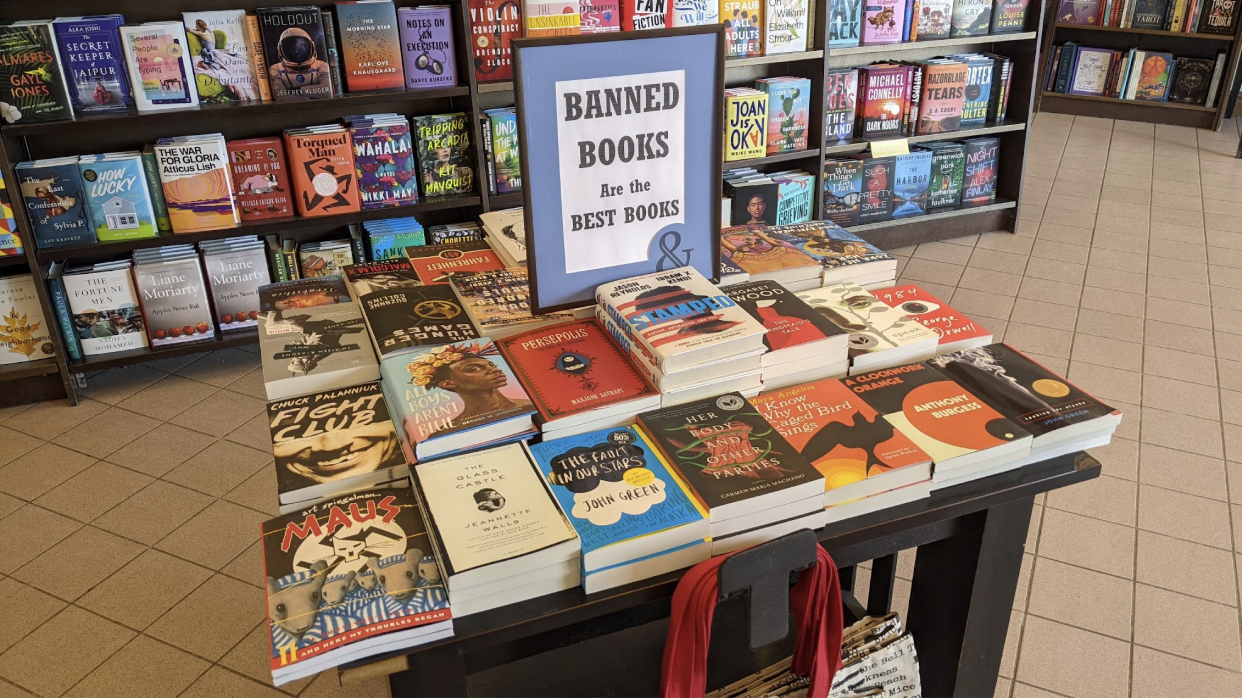
A Barnes & Noble is spreading awareness by having a ‘Banned Books’ section in their store. Image by Corey Morris.
Despite the censorship movement, many communities and people are fighting back. One way they are doing this is by creating funds, such as the LeRoy C. Merritt Humanitarian Fund, that support librarians whose employment is threatened because they fought against book censorship. Also, in Virginia, after Samuels PL lost county funding and was greatly struggling financially, residents helped ot raise more than $650,000 through the Donor Emergency Fund to keep their library operating. Authors have also done their part to help, such as Margaret Atwood, the author of The Handmaid’s Tale. She released an ‘unburnable’ edition of her book and gained $130,000 at the auction, with the proceeds going to PEN America. Organizations such as Barnes& Noble have created sections in stores dedicated to banned books, causing more and more individuals to take an interest in them and read them. Also, across the country, students have organized banned-book clubs, posted videos on social media to advocate against book banning, and marched at school board meetings. Although book bans have evidently been on the rise in recent years, whole communities are unified in taking charge against censorship and advocating for free speech, hinting at hope for the future.
References
“Banned in the USA: Beyond the Shelves.” PEN America, 1 Nov. 2024, pen.org/report/beyond-the-shelves/.
Dye, Skip. “The Making of an Advocate.” Library Journal, vol. 149, no. 6, June 2024, p. 32. EBSCOhost, research.ebsco.com/linkprocessor/plink?id=807bfc26-6b28-32a7-ad37-5e9bbdc8be1a.
“Fund for Librarians Fighting Censorship.” School Library Journal, vol. 69, no. 4, Apr. 2023, p. 15. EBSCOhost, research.ebsco.com/linkprocessor/plink?id=fd45e4ea-5b48-347d-88b4-16b3417cd6bb.
Horne, Jennifer. “Capitol Correspondence: Looking Ahead to the Second Trump Administration.” Kentucky Libraries, vol. 89, no. 1, Jan. 2025, pp. 24–26. EBSCOhost, research.ebsco.com/linkprocessor/plink?id=b136dddf-287e-3e57-bd07-f38ec7767845.
Peet, Lisa. “Samuels Pl Loses County Funding.” Library Journal, vol. 150, no. 10, Oct. 2025, pp. 6–8. EBSCOhost, research.ebsco.com/linkprocessor/plink?id=a751afd8-a07e-34b3-a238-6e0a2272e2ef.
Puryear, Caroline. “Books for Me but Not for Thee: How Modern Book Banning in Public Libraries Will Broadly Disenfranchise First Amendment Liberties.” Houston Law Review, vol. 62, no. 1, Oct. 2024, pp. 211–42. EBSCOhost, research.ebsco.com/linkprocessor/plink?id=23727855-de70-3e23-aa57-8b0da6d2e351.
Rohrlich, Justin. “Moms for Liberty Goes to War with New York School Over Five Library Books.” Yahoo! News, Yahoo!, 29 May 2025, www.yahoo.com/news/moms-liberty-goes-war-york-161902670.html.
