
What is OCD?
By Yehvin Park
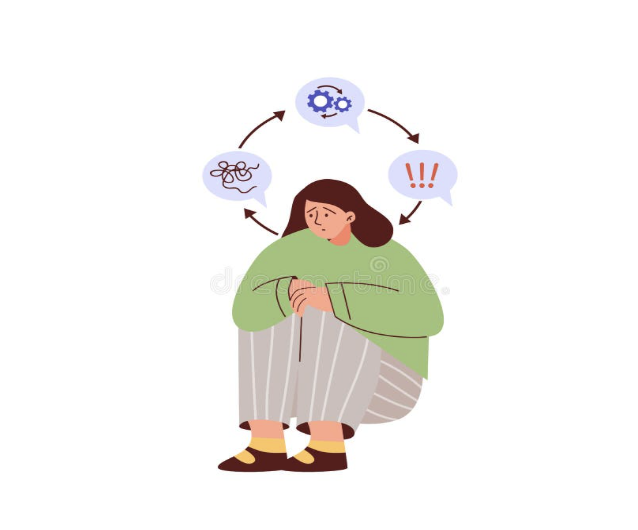
Photo from Dreamstime
What is OCD?
OCD is a mental disorder that stands for Obsessive Compulsive Disorder. Many people have the misconception that this disorder is a minor personality “quirk” or something that everyone has. However, individuals who have this have thoughts and rituals that they have over and over. When most people have an obsession or compulsion, they usually stop, think about it, but are able to move on. However, individuals with OCD cannot stop or control them, and it can severely interfere with how they function in their daily lives. Usually, OCD begins during teenage years, but people who are more at risk of having it can depend on multiple factors. These factors can include family history, brain structure or function, or childhood trauma such as child abuse. There are multiple types of OCD, such as harmful OCD, which can actually present a great risk both to others and to the individual themselves. Typically, people with this have sudden intrusive thoughts or images that urge them to do harmful actions. This could include murder, assault, or self-harm. Common strategies that people use to avoid their breakouts are to be reassured by others or fully avoid people or situations. Most of the time, these thoughts are not actually done, but cause immense fear, loneliness, and anxiety.
Obsession
Obsession plays a huge role when it comes to OCD, hence the name. There are actually many types of obsessions, such as contamination obsessions, violent obsessions, responsibility obsessions, perfectionism-related obsessions, etc. The most common types are contamination, perfectionism, and violent obsessions. Contamination obsessions come from the fear of coming into contact with perceived contaminated substances or things such as germs, chemicals, dirt, or body fluids. People with this type of OCD can cause them to isolate themselves, clean their bodies excessively, or clean their homes excessively. Similarly, people with violent OCD could cause them to isolate themselves, but for the reason that they might harm someone or themselves. This could cause major distress and obsession when violent or horrific images come into their minds. Lastly, the one that most people know is the perfectionism-related OCD. This is when someone is excessively concerned with evenness, with needing to know or remember, losing important information, or performing tasks perfectly. This can cause the individual to do that specific action over and over again until they feel that it is perfect.
Compulsion
Compulsion also plays a large role in OCD, which pairs up with the obsession part of the disorder. OCD compulsions are repetitive behaviors that drive someone to do something. These behaviors or mental acts are meant to reduce anxiety related to the person's obsession or to prevent something bad from happening. However, these compulsions do not actually bring pleasure or a solution, but only offer limited relief from the anxiety. Compulsions usually have themes of cleaning, checking, counting, ordering, or following a strict routine. For example, people who have contamination OCD would wash their hands until their skin becomes raw, or people who have perfection-related OCD would check doors repeatedly to make sure they are locked. This can heavily impact the way people live and often cause more distress rather than being helpful.
Treatment
People who are diagnosed with OCD can be treated but not cured. These treatments can help bring the symptoms under control rather than make it go away. There are two main treatments for OC, which are psychotherapy or medicines. Cognitive behavioral therapy is a type of psychotherapy that is effective for people with OCD. Exposure and response prevention, which is a part of that therapy, exposes the individual to the feared obsession or object to allow the person to get used to it. Although this could take much effort, depending on the severity, it could still improve the quality of life. Another way is medicine. Some medicines can include Fluoxetine, Fluvoxamine, Paroxetine, and others, but it depends on the person's age. These medicines can help control obsessions and compulsions. People mustn’t see OCD as simply a light obsession, and awareness must be shared about this to help find ways to find better solutions or support.
References
International OCD Foundation. “What Is OCD?” International OCD Foundation, 2023, iocdf.org/about-OCD/.
Mayo Clinic. “Obsessive-Compulsive Disorder (OCD).” Mayo Clinic, 21 Dec. 2023, www.mayoclinic.org/diseases-conditions/obsessive-compulsive-disorder/symptoms-causes/syc-20354432.
“Obsessive-Compulsive Disorder (OCD) - Diagnosis and Treatment - Mayo Clinic.” Mayoclinic.org, Mayo Clinic, 21 Dec. 2023, www.mayoclinic.org/diseases-conditions/obsessive-compulsive-disorder/diagnosis-treatment/drc-20354438.
National Library of Medicine . “Obsessive-Compulsive Disorder.” Medlineplus.gov, National Library of Medicine, 17 Oct. 2023, medlineplus.gov/obsessivecompulsivedisorder.html.
“Professional Resources | Anxiety and Depression Association of America, ADAA.” Adaa.org, adaa.org/professionals.
